

Why did the Fed keep rates unchanged despite higher inflation?
Terry Herr CFP®
The Fed's decision to hold interest rates steady even when inflation is elevated reflects a careful balancing act, and understanding the reasoning behind it can help investors make sense of what is happening in the markets and the broader economy. Here are some key points to consider:
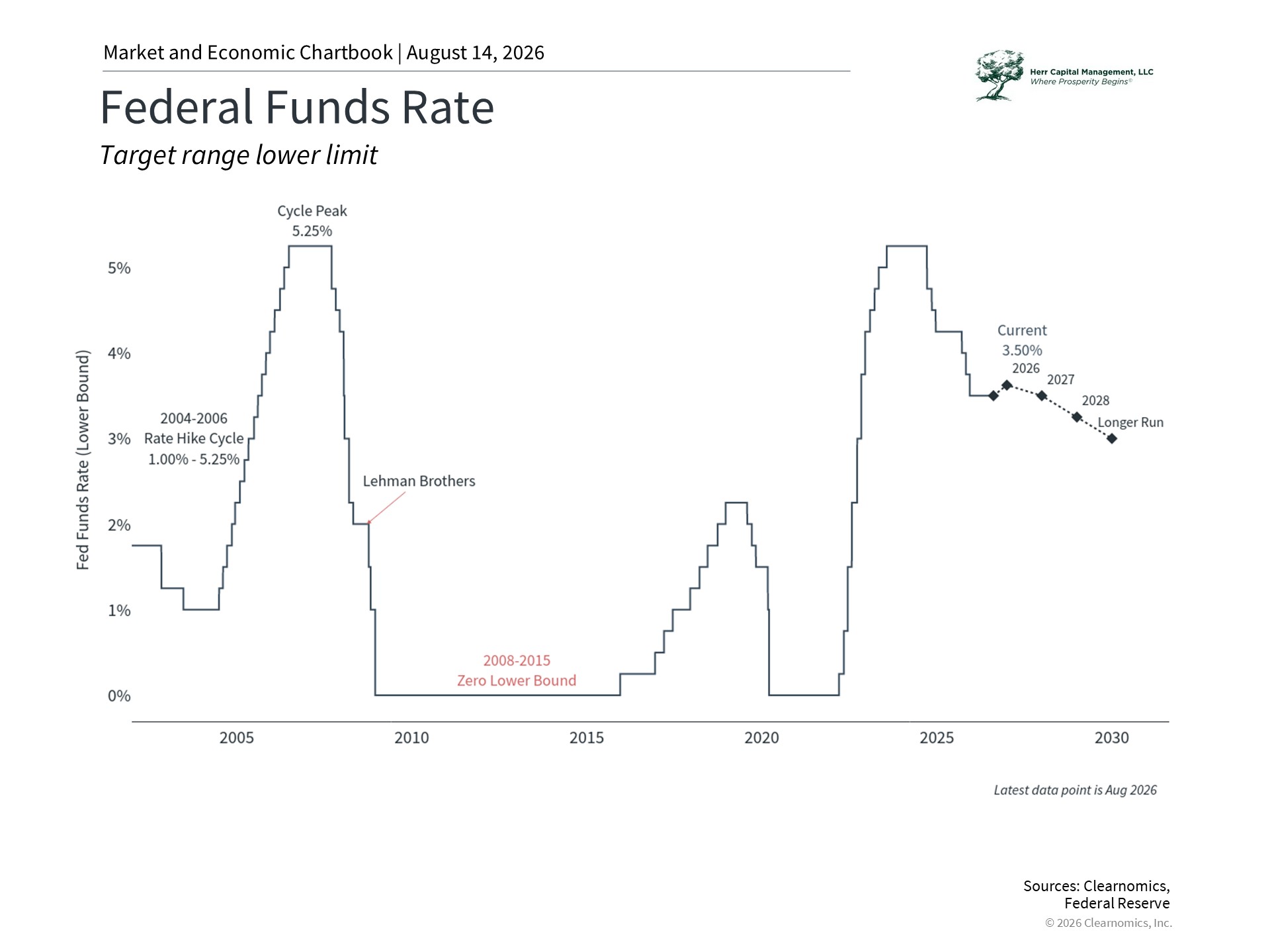
- As of its July 2026 meeting, the Fed kept rates unchanged at 3.5% to 3.75%, even as inflation remained above its target. The central concern is that much of the inflation is being driven by energy prices tied to the Middle East conflict, which may be temporary. Core inflation, which strips out food and energy, was only 2.5% year-over-year as of July 2026, suggesting the price pressures have not broadly spread through the economy.
- The Fed is also weighing a weakening labor market, with the July 2026 jobs report showing a loss of 23,000 payrolls. Raising rates aggressively into a slowing job market could deepen economic weakness, so the Fed is choosing to wait and see whether energy-driven inflation proves short-lived.
- For investors, this environment has pushed long-term Treasury yields higher, with the 30-year yield reaching nearly a 20-year high. Investment grade corporate bonds were yielding around 5.3% and Treasurys around 4.4% as of May 2026, both above historical averages, making fixed income more attractive than it has been in years.
The chart below shows how the Fed has navigated different economic cycles over time, which helps put the current pause in a broader historical context. Keeping rates steady during periods of uncertainty is not unusual, and the Fed has faced similar crossroads before.
While the current environment can feel uncertain, long-term investors are best served by staying focused on the bigger picture, because economic cycles and policy shifts tend to smooth out over time, and patient, diversified investing has historically been rewarded.
This content is developed from sources believed to be providing accurate information, and provided by Twenty Over Ten. It may not be used for the purpose of avoiding any federal tax penalties. Please consult legal or tax professionals for specific information regarding your individual situation. The opinions expressed and material provided are for general information, and should not be considered a solicitation for the purchase or sale of any security.