

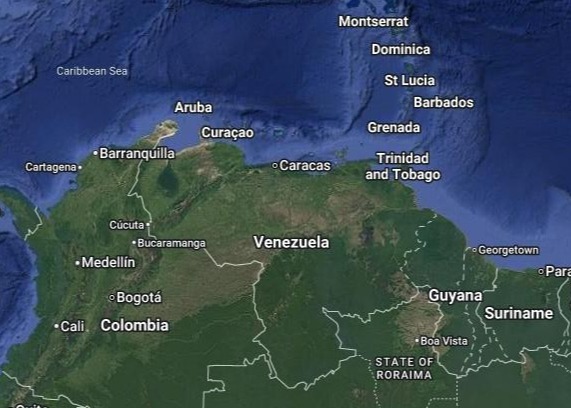
Venezuela, Oil, and the Impact on Portfolios
Terry Herr, CFP®
The arrest of Venezuelan President Nicolás Maduro by U.S. forces represents an unexpected and significant geopolitical event. As has been widely reported, the U.S. military successfully conducted an operation that detained Maduro on charges related to drug trafficking and corruption. President Trump stated in a press conference that the United States will "run" Venezuela and work to expand its oil production.
While the humanitarian and geopolitical implications for the Venezuelan people and the region are most important, investors may naturally wonder what all of these issues mean for their portfolios. The move raises many questions around the role of the U.S. in the region, whether this will pave the way for democratic elections in Venezuela, the effect on the narcotics trade, if oil production will increase meaningfully, and how it will impact the sphere of influence of countries like Iran and China.
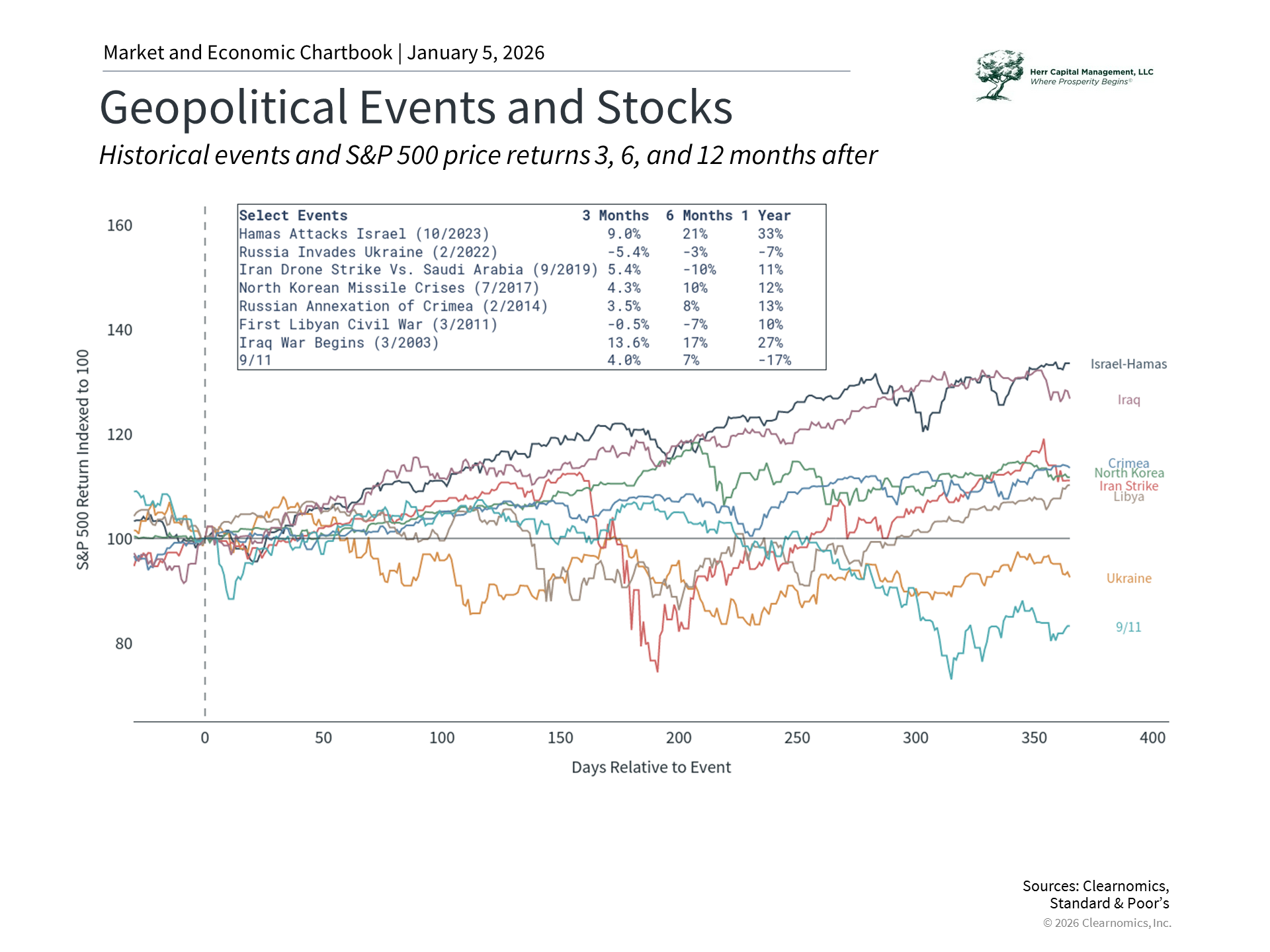
History provides important context: geopolitical events often create short-term market volatility, but their long-term market impact tends to be limited. This is because these events don't typically change the direction of broad economic and market drivers, even if oil production is affected. This has certainly been true of geopolitical conflicts in recent years, including in Ukraine and the Middle East. Understanding this pattern can help investors maintain perspective and focus on the factors that historically drive market performance.
Historical perspective
 |
First, it’s helpful to briefly review the history of U.S. involvement in the region, since the discussion around U.S. intervention in Venezuela is complex and spans topics from international law to regional stability. The Monroe Doctrine, first articulated by President James Monroe in 1823, established that European powers should not interfere in the Western Hemisphere. Applied to recent events, it would suggest that South America represents the country’s “backyard,” so any hostile act in the region would be viewed as an act against the United States. President Trump has referred to this idea, most recently calling his foreign policy views the “Don-roe Doctrine.”
This is far from the first time the U.S. has intervened in a Latin American country. For example, in 1990, exactly 36 years ago to the day, the U.S. captured Manuel Noriega in Panama based on drug trafficking charges. And while the latest operation in Venezuela was generally unexpected, Maduro has been under indictment by the U.S. Department of Justice since 2020 on charges of narco-terrorism and drug trafficking. The Biden administration had maintained sanctions on Venezuela and, in early 2025, placed a $25 million bounty on Maduro, which was then raised to $50 million by the Trump administration.
Like other U.S. military and law enforcement actions, there are many interrelated objectives. The stated reason for the operation was to target narco-terrorism, which Maduro and 14 Venezuelan officials were criminally charged with by the U.S. in 2020. The fact that many nations view Maduro’s rule as illegitimate, based on the country’s 2024 election, strengthens this objective. Prior to the presidencies of Maduro and Hugo Chávez, Venezuela was a democracy and one of the wealthiest in the region.
The most important point is that geopolitical risk is a normal part of investing, even if the specific circumstances differ each time. These news stories may also feel more concerning since they differ from everyday business news about corporate earnings and economic data. The chart above highlights many significant geopolitical events over the past few decades. In most cases, markets recovered within weeks or months, if they were affected at all.
Oil connects geopolitics to financial markets
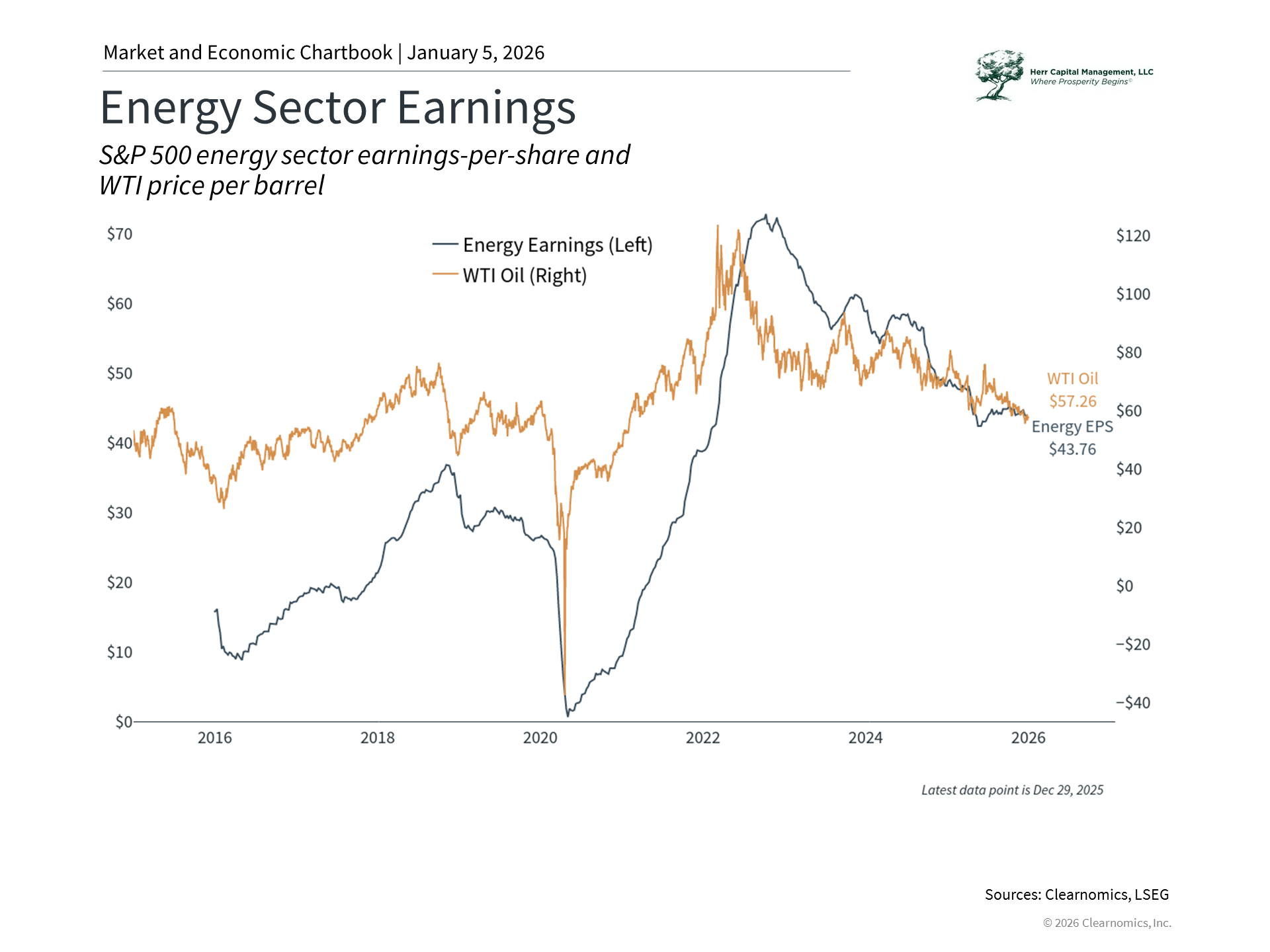 |
For investors, the effect on oil prices may be the most consequential issue. This is because the primary channel through which geopolitical events affect financial markets is through commodity prices, and oil remains central to the global economy. Venezuela is important in this regard since the country possesses the world's largest proven oil reserves at approximately 304 billion barrels, according to the U.S. Energy Information Administration. To put this in perspective, this exceeds even Saudi Arabia's 267 billion barrels.
Despite these vast reserves, Venezuela produces far less oil than other countries. Venezuelan oil production has declined dramatically over the past two decades due to mismanagement, lack of investment in infrastructure, and sanctions. Today, production has fallen to less than 1 million barrels per day, compared to the U.S. of nearly 14 million.1 If Venezuelan production is increased, it will likely take time and investment to meaningfully add to global supply. This minimizes the immediate effect on markets.
Over time, U.S. energy companies could see an opportunity to increase their access to these reserves, although a lower oil price due to greater supply could offset some of this upside. For the broader economy and consumers, any shock to markets could potentially be positive since increased Venezuelan production would place downward pressure on oil prices over time. This makes it different from other conflicts such as Russia's invasion of Ukraine in 2022, which disrupted existing supply and drove oil prices to nearly $128 per barrel. That situation worsened post-pandemic inflationary pressures and pushed average U.S. gasoline prices above $5 per gallon.
Current oil prices remain far below those peak levels. In fact, prices have been subdued over the past year, with WTI crude trading below $60 per barrel and Brent crude just around that level. According to reports, the immediate response to recent events in Venezuela by OPEC+ countries has been to keep their production quotas steady, suggesting they are monitoring the situation before making strategic adjustments. The fact that the U.S. is now the largest producer of oil and gas in the world helps to further reduce the impact on the domestic economy.
That said, it's important to remember that energy prices are difficult to predict with accuracy, and the U.S. is still dependent on crude imports. When Russia invaded Ukraine, many predicted that oil and natural gas prices would remain elevated indefinitely, especially with a harsh winter forecasted for Europe. However, prices stabilized and began declining far sooner than many projected. This is a reminder that, since oil is a global commodity, there are many factors that can unexpectedly affect prices.
Venezuela plays a minimal role in global markets
 |
Another key fact for investors is that Venezuela plays an insignificant role in global financial markets. Its stock market, the Bolsa de Valores de Caracas, is small and illiquid, with limited foreign participation. It is not included in the MSCI Emerging Markets Index, so most international investors have minimal or no direct exposure to Venezuelan stocks. The country's economic collapse over the past decade has essentially excluded it from emerging market portfolios.
When it comes to the bond market, Venezuela has been in default since 2017 when it failed to make payments on its debt. Bondholders have been negotiating restructuring terms, but the bonds trade at deeply distressed levels reflecting the expectation of significant losses.
The situation in Venezuela will continue to evolve, and there may be additional developments that capture market attention. The indirect effects on oil prices and uncertainty are likely to outweigh the direct effects from the country and its stock market. Rather than trying to predict exactly how the situation might play out, investors should instead focus on aligning their portfolios with their financial goals.
The bottom line? The arrest of Venezuela's president represents a significant geopolitical development with humanitarian and regional implications. However, history shows that portfolios built around long-term financial goals can navigate geopolitical uncertainty.
References 1. https://www.eia.gov/outlooks/steo/tables/pdf/3dtab.pdf
Herr Capital Management, LLC is a registered investment advisor domiciled in Illinois.
This content is for information purposes and should not be construed as legal or tax advice and is not intended to replace the advice of a qualified attorney, financial or tax advisor or plan provider. Products or services mentioned on this Site will not be made available to persons resident in any state or territory where such distribution would be contrary to local law or regulation. Copyright (c) 2026 Clearnomics, Inc. All rights reserved. The information contained herein has been obtained from sources believed to be reliable, but is not necessarily complete and its accuracy cannot be guaranteed. No representation or warranty, express or implied, is made as to the fairness, accuracy, completeness, or correctness of the information and opinions contained herein. The views and the other information provided are subject to change without notice. All reports posted on or via www.clearnomics.com or any affiliated websites, applications, or services are issued without regard to the specific investment objectives, financial situation, or particular needs of any specific recipient and are not to be construed as a solicitation or an offer to buy or sell any securities or related financial instruments. Past performance is not necessarily a guide to future results. Company fundamentals and earnings may be mentioned occasionally, but should not be construed as a recommendation to buy, sell, or hold the company's stock. Predictions, forecasts, and estimates for any and all markets should not be construed as recommendations to buy, sell, or hold any security--including mutual funds, futures contracts, and exchange traded funds, or any similar instruments. The text, images, and other materials contained or displayed in this report are proprietary to Clearnomics, Inc. and constitute valuable intellectual property. All unauthorized reproduction or other use of material from Clearnomics, Inc. shall be deemed willful infringement(s) of this copyright and other proprietary and intellectual property rights, including but not limited to, rights of privacy. Clearnomics, Inc. expressly reserves all rights in connection with its intellectual property, including without limitation the right to block the transfer of its products and services and/or to track usage thereof, through electronic tracking technology, and all other lawful means, now known or hereafter devised. Clearnomics, Inc. reserves the right, without further notice, to pursue to the fullest extent allowed by the law any and all criminal and civil remedies for the violation of its rights.