facebook twitter instagram linkedin google youtube vimeo tumblr yelp rss email podcast phone blog search brokercheck brokercheck Play Pause

Keeping You Informed 

Of the Latest Market Trends and Updates

Join Us for Exclusive Financial Insights.


Search articles.


Broad Market Volatility and AI Uncertainty: Long-Term Perspectives Thumbnail

Broad Market Volatility and AI Uncertainty: Long-Term Perspectives

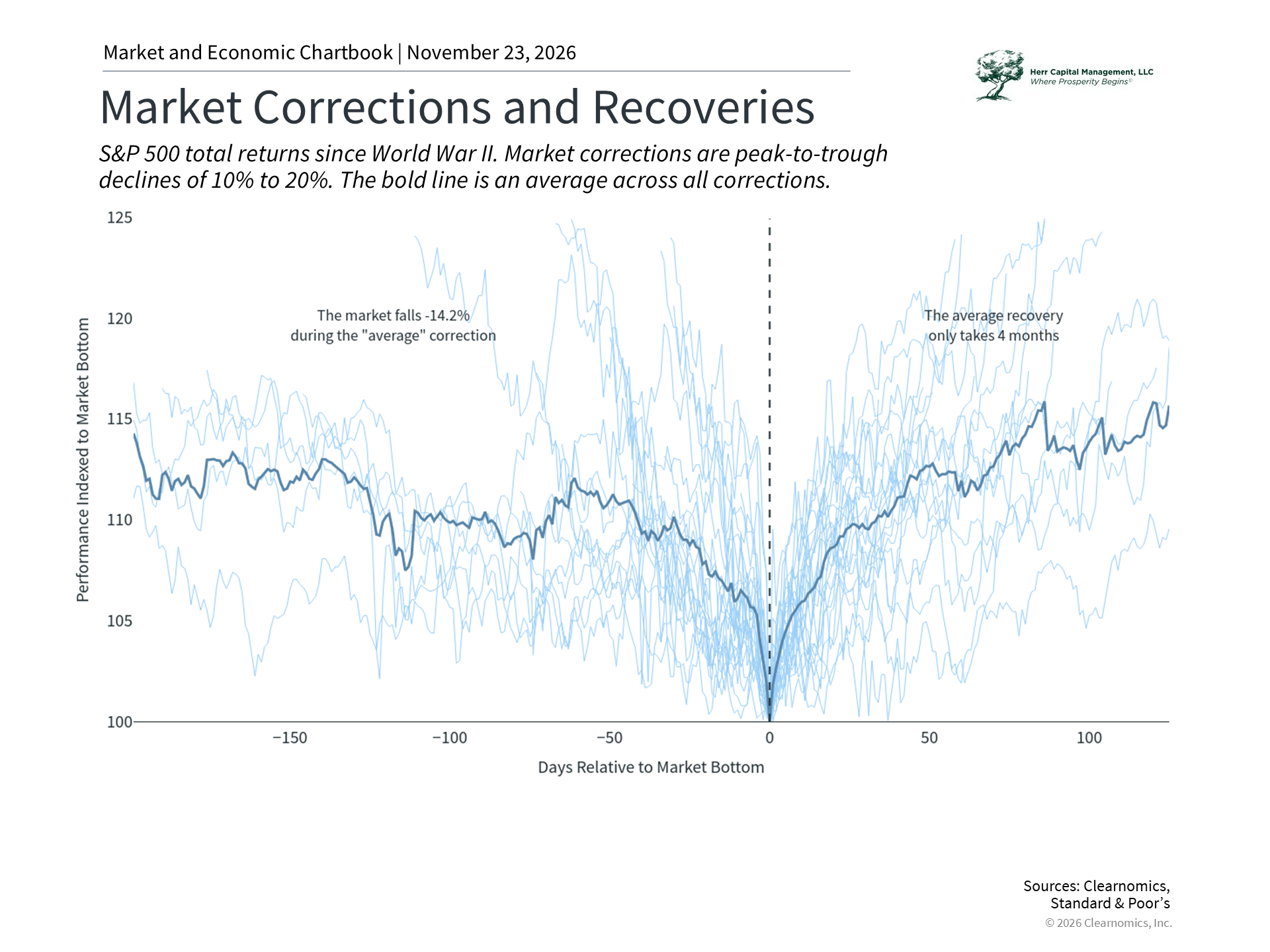
Volatile markets are often driven by a combination of factors, and recent swings across major market indices are no exception. Several recent developments, including leadership changes at Nvidia and Anthropic’s initial public offering (IPO), extended beyond AI stocks and pushed the S&P 500 and Dow Jones Industrial Average to market correction levels, while the Nasdaq briefly erased its year-to-date gains.1 Many investors will naturally consider opportunities and risks by comparing today's environment to periods such as the dot-com bust of the early 2000s. While there are surface-level similarities, a more useful lesson from that era may be that it built the infrastructure that powered the following decades of innovation. How can investors keep all of this in balance amid ongoing market volatility?

Read More
What Leadership Changes at Nvidia Mean for AI Trends Thumbnail

What Leadership Changes at Nvidia Mean for AI Trends

Technology and AI-related stocks have experienced a period of volatility since the Nasdaq reached its all-time high in early October. The midterm election first raised questions about the pace of data center construction across the country. Now, investors are digesting the news about Jensen Huang, the co-founder who has led Nvidia since 1993, including leadership changes, espionage as part of the AI race between the U.S. and China, and how Nvidia will navigate the period ahead. While the story is still unfolding, it's not surprising that this news has captured investor attention given Nvidia's central role as a supplier of chips to the AI industry. How can investors make sense of these developments while maintaining a long-term perspective?

Read More
What 7% Mortgages Mean for Housing and the Economy Thumbnail

What 7% Mortgages Mean for Housing and the Economy

One factor that directly impacts the housing market is interest rates. When rates rise, mortgage costs for new applicants rise as well, affecting everything from loan qualification to the volume of home sales. The average 30-year fixed mortgage rate is now back above 7% after falling toward 6% at the start of the year. While mortgage rates have been volatile in recent years, they have not been sustainably at these levels in nearly 25 years. What could these housing market pressures mean for households and the broader economy?

Read More
Monetary Policy Is Not A Panacea Thumbnail

Monetary Policy Is Not A Panacea

Janet Yellen, the former Federal Reserve Chair, often said that "monetary policy is not a panacea."1 Just as there is no cure for the common cold, except to let it run its course and address the symptoms, the Fed’s tools often cannot fix the underlying issues in the economy. In theory, monetary policy is meant to help ease these challenges, especially when it comes to the job market and inflation. In practice, however, the Fed does not control the economy directly, but instead responds to the economic environment.

Read More
What's Driving Portfolios Beneath the Surface? Thumbnail

What's Driving Portfolios Beneath the Surface?

Areas of the market including small caps, value stocks, and international companies have outperformed over the past year, and their valuations have generally been more attractive. Understanding how sizes and styles have performed can help investors maintain balance. What is happening beneath the surface of the broad market indices, and what does it mean for investors?

Read More